By EOVIsion.ai, GenUI, and Unigen
AI Medical image Analysis is transforming healthcare by enhancing diagnostic speed, accuracy, and cost-efficiency without replacing medical professionals. Traditional cloud-based workflows for analyzing large pathology images are often slow, expensive, and resource-intensive. A new on-premise AI inference approach leverages high-performance, low-power servers positioned directly within hospitals and diagnostic centers to dramatically reduce latency, lower costs, and strengthen data privacy. By processing ultra-high-resolution images locally and integrating an intuitive user interface, this solution enables healthcare providers to deliver faster diagnoses (often in under 30 minutes) while maintaining clinical oversight and improving patient outcomes.
Advancements in medical image analysis
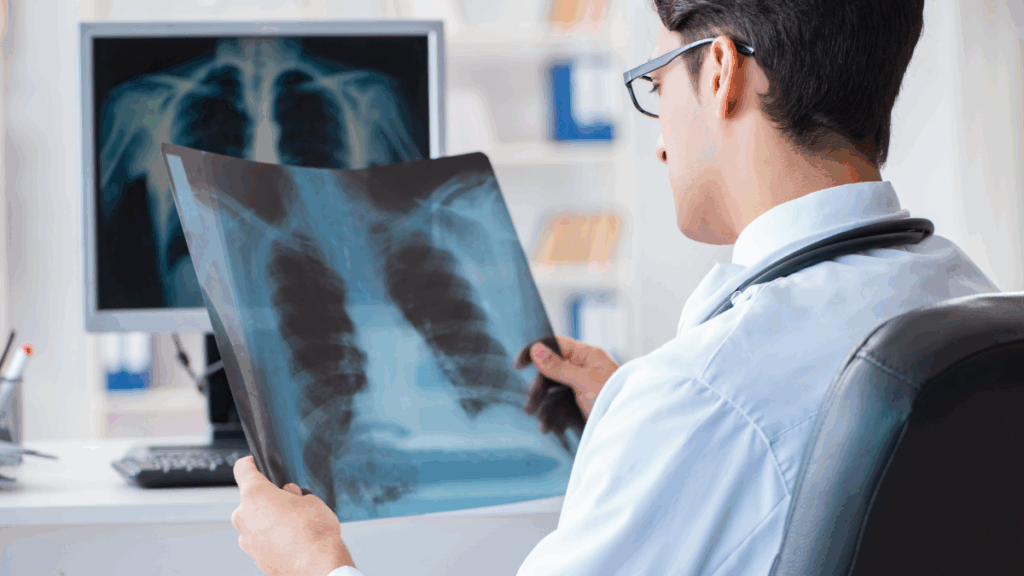
Medical image analysis represents one of the most revolutionary advancements in healthcare, significantly improving the diagnostic and treatment capabilities of a myriad of conditions. The field has seen rapid technological innovation over the last 100 years, from the first X-ray in 1895 to more sophisticated 3D imaging methods like CT scans and MRI technology. Today, with the advancement of Artificial Intelligence (AI), the capabilities of healthcare professionals can be enhanced (NOT REPLACED!) to improve productivity and diagnostic accuracy. We are already seeing the benefits of AI technology and we are just beginning to scratch the surface.
The problem: slow and expensive medical image analysis
Every day, pathologists and researchers spend thousands of hours screening images for abnormalities or cells that could be signs of a disease such as cancer. The time of these specialists is not only a very expensive resource, but this process also creates a time latency to provide a diagnosis for the physician and the patient. The current solution to this issue requires sending large images to data centers, where the images are tiled into thousands of smaller images and then inspected by powerful servers, and the data stored in their data lakes. This process is also problematic since it involves an additional latency to transmit the data and involves extra costs for data storage and spinning up and taking down costly GPU server instances in “The Cloud” to perform each of the computational steps.
A new approach to medical image analysis is emerging, aiming to establish the foundation for how clinical decisions are made across the healthcare industry. One such platform enables the detection and identification of anomalous cells with speed and precision, empowering healthcare institutions to improve diagnosis and deliver more focused treatments. While the platform delivers results efficiently through its secure cloud-based system, some institutions may opt to incorporate new server technology for on-premise AI inference to further reduce latency, strengthen data privacy, or manage long-term cloud-related costs. These options can provide additional value depending on institutional needs and operational preferences.
A more efficient solution: on-premise AI inference for medical image analysis
A new solution being proposed to solve the problem of slow and expensive medical diagnostic imaging is the addition of an inference server with high performance AI Inference modules that are currently being adopted for high volume security camera operations which can now be adapted for on-premise operations in hospitals and diagnostic centers.
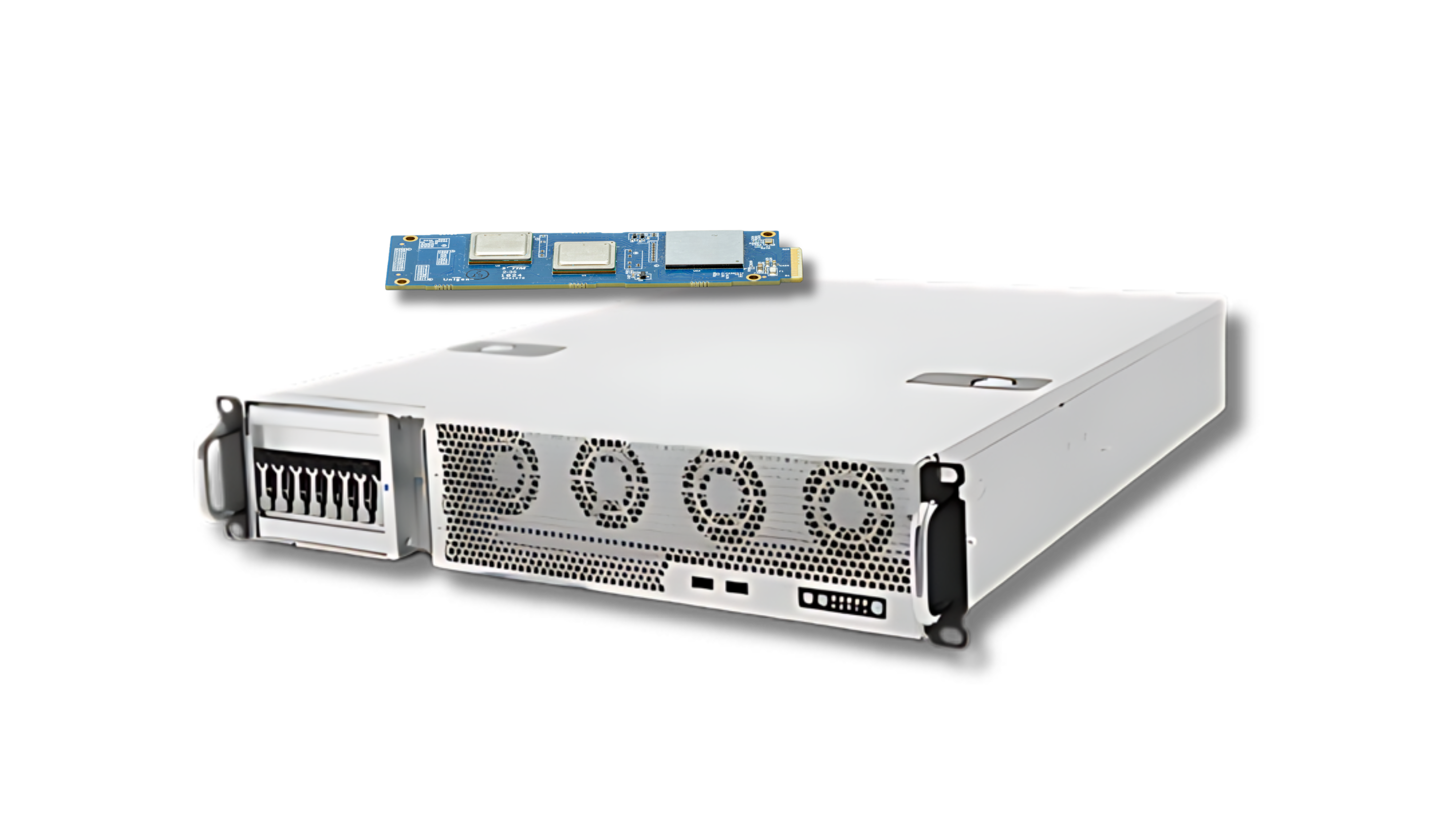
These servers, which use less than 20% of the power of a GPU server, can be co-located near the diagnostic imaging microscope to avoid the issues of transmission and costs associated with data ingress/egress and cloud storage. This solution, which costs less than 20% of a GPU server, can significantly shorten the time for a diagnosis from hours or even days to less than 30 minutes.
By reducing the latency of sending huge files over the internet, it allows a simpler path by copying them to a local server. This also affords the luxury of a large memory capacity server and an ultrafast NVMe Solid State Drive storage device, which can tile 100Kx100K pixel images into smaller 640×640 pixel frames and process them on the Inference AI modules through 32 lanes of PCIe bandwidth directly to memory, which significantly reduces the time for computation. It also can be used by a diagnostician to directly interface with the server through a VPN (Virtual Private Network) to securely view the images on the server and see if there are anomalous cells (highlighted by red Yolo squares) or an all-clear signal for a healthy image.
Increasing accessibility through intuitive user interface
In addition to dramatically reducing the latency and cost of medical diagnosis, this product also makes it easy for a physician to see the result. The addition of a custom built User Interface (UI) dedicated to medical health specialists takes this from a device to a complete solution. Through the addition of a state of the art visual agent, this solution can provide an intuitive presentation of the information that allows access and navigation through the images managed for human beings.
Conclusion
In conclusion, when companies with disparate technological core competencies (like EOVIsion.ai, GenUI, and Unigen) work together using the latest tools towards a common cause, the result can be much greater than the sum of its parts. Our goal isn’t simply about building the latest and greatest technology. We are passionate about designing solutions that can impact people’s everyday lives. By using our combined technology, we are not just improving the efficiency of medical diagnostic imaging. We’re making sure every patient can get the timely and accurate diagnosis they deserve.
Key Takeaways: On-Prem AI for Medical Image Analysis
- Faster Diagnoses: On-premise AI inference reduces turnaround time from hours or days to under 30 minutes.
- Lower Costs: High-performance inference servers use less than 20% of the power and cost of traditional GPU cloud servers.
- Improved Data Privacy: Local processing minimizes data transmission and reduces cloud storage and egress fees.
- Enhanced Clinical Productivity: AI highlights anomalous cells to support pathologists, increasing efficiency without replacing expertise.
- User-Friendly Interface: A dedicated medical UI simplifies image navigation and interpretation for healthcare professionals.
About Unigen Corporation
Founded in 1991, Unigen is an established global leader in the design and manufacture of OEM products including SSDs, DRAM modules, NVDIMMs, Enterprise IO, and AI solutions. Unigen also offers a full array of Electronics Manufacturing Services (EMS), including design, quick-turn prototyping, new product introduction, volume production, supply chain management, assembly & test, and aftermarket services. Headquartered in Newark, California, the company operates state-of-the-art manufacturing facilities (ISO-9001/14001/13485 and IATF 16949) in the heart of Silicon Valley as well as offshore in Vietnam and Malaysia. Unigen offers its products and services to customers worldwide targeting a broad range of end markets including automotive, computing and storage, embedded, medical, AI, robotics, clean energy, defense, aerospace, and IoT. Learn more about Unigen’s products and services at unigen.com.
Glossary
- AI Medical Image Analysis: The use of artificial intelligence to examine medical images (e.g., pathology slides, CT scans) to detect abnormalities and support diagnosis.
- Inference Server: A server optimized to run trained AI models and generate predictions from new data.
- GPU (Graphics Processing Unit): A specialized processor often used in AI workloads due to its high parallel processing capability.
- On-Premise: Infrastructure hosted locally within a hospital or facility rather than in the cloud.
- Latency: The delay between sending data and receiving results.
- NVMe SSD: A high-speed solid-state storage device that enables rapid data access and processing.
- PCIe (Peripheral Component Interconnect Express): A high-bandwidth hardware interface used to connect components like AI modules to a server.
- Tiling: Breaking large medical images into smaller segments for AI processing.
- VPN (Virtual Private Network): A secure connection that allows remote access to systems and data.
- YOLO (You Only Look Once): A real-time object detection algorithm often used to identify and highlight features within images.